Su carrito está vacío
Best Seller

New Release!

Trending Now!
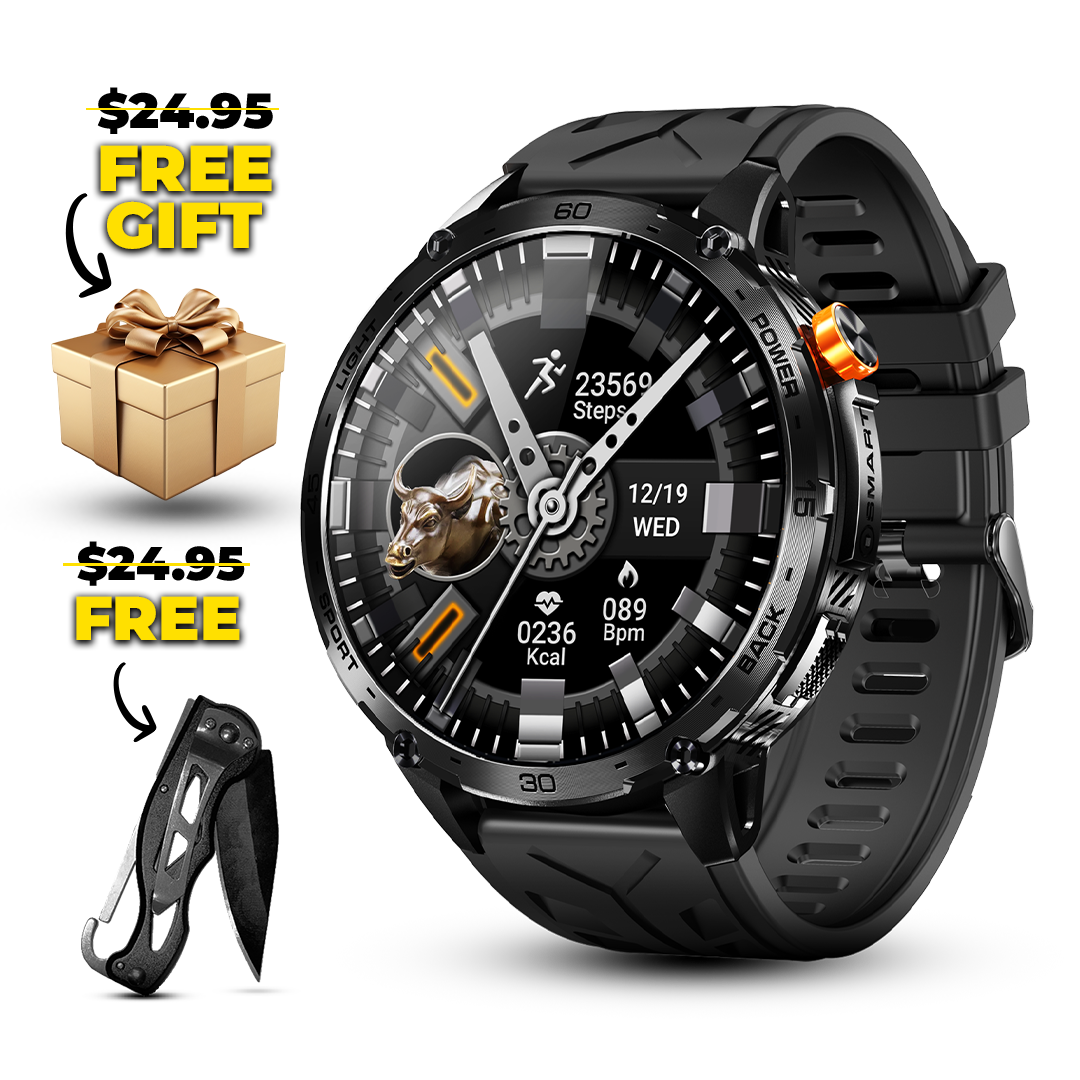
Most Popular
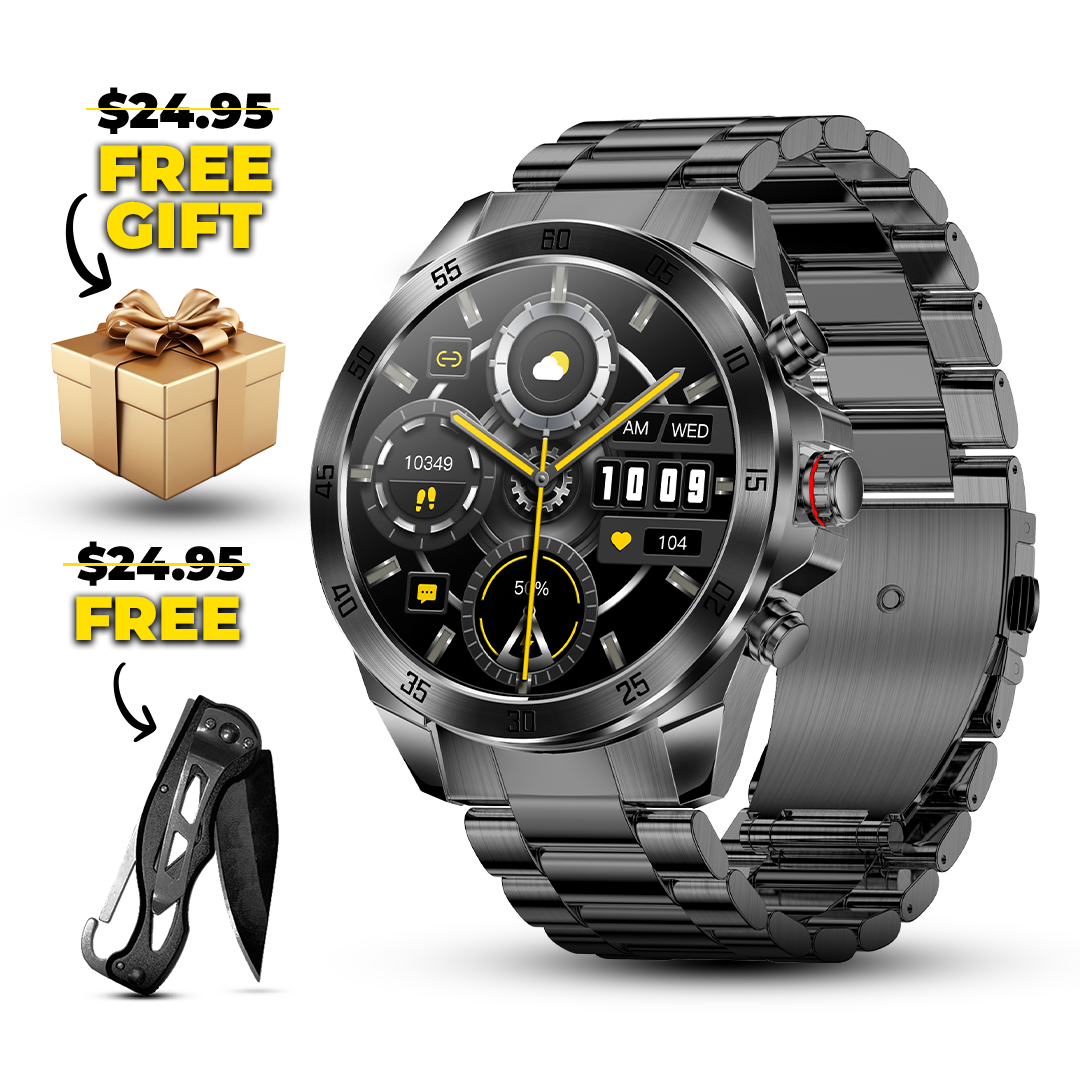
Back in Stock
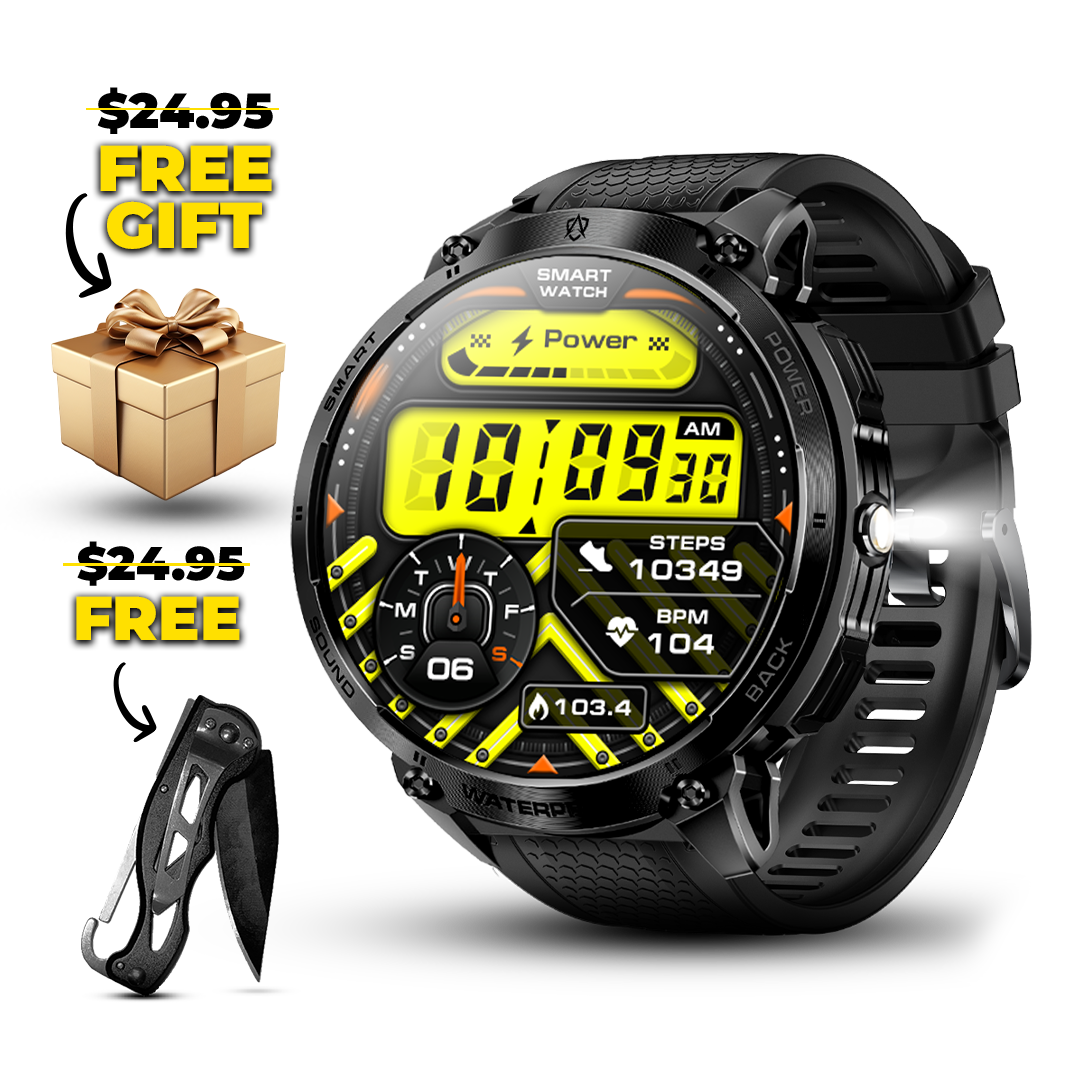

Carrito
Su carrito está vacío
Framing, welding, service calls, long hauls. Each one kills a watch a different way. What to check before you buy, and how to match the watch to the work.

There is a moment most men in trades have had. The watch is fine for three months, then one bad morning happens: a ladder, a door frame, a dropped toolbox. The glass goes, or the case does, and you are back to checking your phone with gloves on.
The problem is not that you bought a cheap watch. It is that almost every smartwatch on the market was designed for someone who walks from a desk to a parking lot. Thin glass, plastic housing, a battery that assumes you plug it in every night beside a nightstand you are not always near.
The fix is not just buying something thicker. Rugged watches are not one category, they are four or five, and what separates them is not a price ladder, it is what your day actually does to a watch. Sun. Water. How far you get from an outlet. Whether you take it off before dinner.
One thing worth saying up front, because it is where most rugged watches fail. A watch that only works on site is still a watch you take off at five. The good ones stay on your wrist through the rest of it too, and there is a section below about that half of the week.
It is almost always one of these three, and none of them are bad luck.
Aluminium and plastic dent and crack. A metal case takes the same hit and carries the mark instead of passing it to the glass.
A watch that needs the charger nightly is one you will forget once, wear dead all day, and stop putting on by month three.
A dim panel in direct sun is a mirror. If you have to cup your hand over it to read the time, it is the wrong screen.
Two of these get skipped on almost every spec sheet, and they are the two that decide whether the watch is still on your wrist next year.
“Waterproof” is a word, not a rating. 1 ATM with an IP67 seal handles rain, sweat, washing up and a soaking. 3 ATM with IP69K handles pressure washing and sustained dust. Match the number to the day you actually have.
The honest figure is normal daily use with the features on. A week is the threshold where charging stops being a habit you maintain and becomes something you do on a Sunday without thinking about it.
Look for a speaker and mic that take calls over Bluetooth straight from the phone in your pocket. No SIM, no second line, nothing extra to pay monthly. You answer with your hands full, which is the whole point, and plenty of rugged watches still leave it out.
Most brands give you twelve months and the word “limited.” On a watch you are buying because it is going to get hit, that is the wrong end of the deal. A lifetime warranty exists at this price. It is worth holding out for one.
Notifications land on the wrist, which sounds minor until you count how many times a day you pull a phone out of a pocket to look at something you did not need. A name, a time, a text that can wait. You glance instead, and your hands stay where they were.
The wellness side should run by itself. The better ones read heart rate, blood oxygen and sleep in the background, all day and overnight, with nothing to log and no subscription behind any of it. You are not being coached. The numbers are just there when you feel like looking, which for most men is the only version of this they will actually use.
And it should not look like gym equipment. That matters more than the spec sheet suggests, because a watch you are slightly embarrassed to wear out is a watch that ends up in a drawer by spring.
Held against that list, one lineup sorts unusually cleanly. AlphaGear, out of Florida, builds four rugged models, and they are not a price ladder stacked from cheap to good. Calling from the wrist, background wellness tracking, thirty days to change your mind and a lifetime warranty are standard across all four.
What changes between them is which part of the day the watch has to survive. Below is each one, what it was actually built around, and the man it is for.
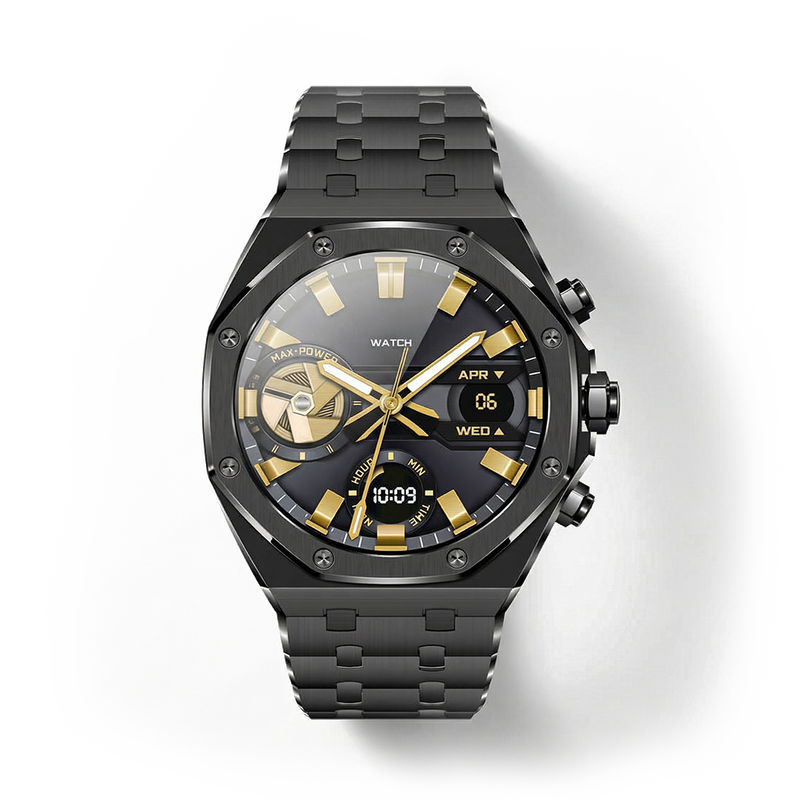
Every other rugged watch announces itself. That works on site and stops working the second you sit down somewhere with a tablecloth. The Chief is the one built around that problem: a full-metal hex bezel, the only one of its kind, that reads as a watch from across a room rather than a screen on a strap.
It is also the heaviest of the four at 152 grams, and that weight is the point. It is what separates a watch from a gadget the moment somebody picks it up. Underneath, it is still rated 1 ATM and IP67 and runs seven to nine days a charge, so nothing about the look costs you anything on the job.
This is the one men buy when they have worn the same analog watch for twenty years and finally want the notifications, without wanting to look like they have given up on watches. It is the most common thing owners report back: somebody asks what brand it is, and they are not asking because it looks like a smartwatch.
Eight hundred milliamp-hours, the largest cell in the lineup, running seven to fourteen days of normal use and thirty on standby. If your work takes you somewhere there is no outlet for a few days at a time, this is the only one of the four that stops being a question.
It is also the one that changes character. It ships on silicone, and a stainless steel band is made for it, so the same watch goes from the bed of a truck to a Friday night by swapping a band instead of buying a second watch.
The thirty days of standby matter more than they look. A watch that sits in a drawer between jobs and is still alive when you pick it up is a different object from one you have to remember to charge before every trip. The Raptor Pro is also the only one of the four with breath training built in.

This is the only one of the four that navigates. The GPS pulls from six satellite systems at once rather than one, which is the difference between holding a fix under tree cover and watching a line drift across a map. There is a real compass alongside it.
The rest keeps up. A 530mAh cell gives seven to eight days with everything running, stretches to twenty-one on a single charge if you are not leaning on it, and holds about twenty-five in standby. It is sealed to 3 ATM at 130 grams, so the navigation does not arrive attached to a brick.
One thing to know before you order. The Delta Series 2 comes in two versions, and the GPS is what separates them. If you want the satellite navigation and the compass, take the Built-In GPS version. If you are buying it for the battery and the build and you navigate by road, the standard version saves you twenty dollars.

Two numbers make this one. The screen is 1.85 inches, the largest in the lineup, which means you read a name at arm's length instead of squinting at it. And the seal is 3 ATM with IP69K, the highest rating in the lineup, which is the standard written for high-pressure, high-temperature washdown and heavy dust.
It also carries a flashlight in the case, which sounds like a small thing right up to the first time you are under a sink or behind a panel with both hands busy and no way to hold a phone. A 730mAh cell keeps it going seven to fourteen days, thirty on standby.
If your work involves being hosed down, this is the one. Food service, agriculture, fabrication, anything that ends with a pressure washer. IP69K is not a marketing grade, it is the standard written specifically for high-pressure, high-temperature washdown, and it is the reason this watch survives an environment that quietly kills the other three.
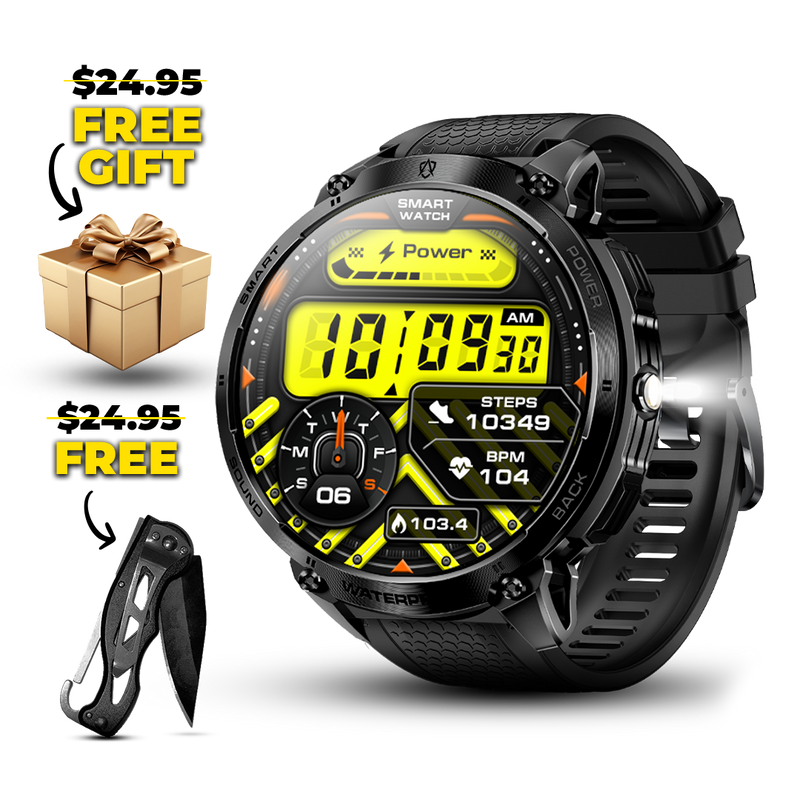
If you want it to look like a watch, the Chief. If you are days from an outlet, the Raptor Pro. If you leave the road, the Delta Series 2. If the conditions are the problem, the Bravo XL2.
All four ship from Florida, come with thirty days to change your mind, and carry a lifetime warranty rather than a twelve-month one.
See All Four →© 2026 AlphaGear. All Rights Reserved.